Understanding Emotions as Data
Understanding Emotions as Data
Emotions are a powerful part of being human. They can feel overwhelming at times, but they have an important role in our lives. By understanding our emotions as data, we can gain insights into our needs, growth, and personal alignment. Let's take a closer look at how emotions serve as valuable data points.
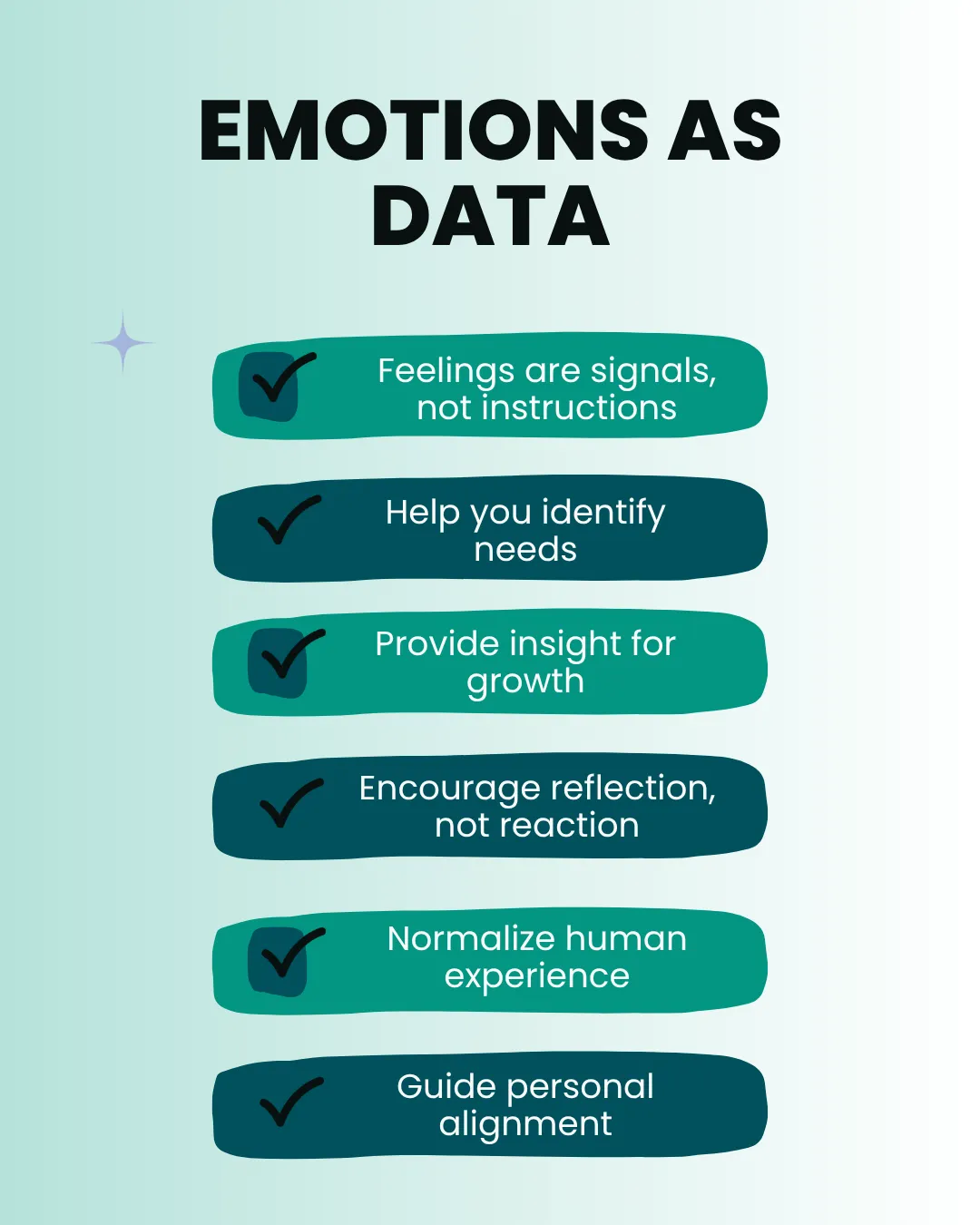
Feelings Are Signals, Not Instructions
Feelings are like signals from our brains. They tell us something about our environment or what we are experiencing. Think of them like traffic lights. A red light tells us to stop, while a green light signals us to go. However, unlike traffic lights, feelings are not direct instructions. They are signals to consider and interpret, not orders to follow blindly.
- Feelings can alert us to danger, excitement, or sadness.
- They are the brain's way of communicating with the rest of our body.
Help You Identify Needs
Emotions can help us identify what our needs might be. If you are feeling tired, your body is signaling the need for rest. If you’re lonely, you might need connection with others. By recognizing and understanding these signals, we can better address what we need to thrive.
Provide Insight for Growth
Our emotions can open the door to personal growth. When we examine what we feel and why, we can learn more about ourselves. For example, feeling anxious about a new task might signal a lack of confidence in that area. Recognizing this can motivate us to gain more experience or learn new skills, turning anxiety into growth opportunities.
- Understanding emotions can highlight areas for improvement.
- They encourage us to try new experiences and gain new skills.
Encourage Reflection, Not Reaction
Emotions often urge us to react quickly, but it's important to pause and reflect instead. By taking time to think about what we feel, we can make mindful decisions rather than impulsive ones. Reflection allows us to understand the root cause of our feelings and helps us respond in a balanced manner.
Normalize Human Experience
Feeling a range of emotions is a normal part of being human. Accepting all emotions, both positive and negative, can help normalize our experiences. By doing so, we’re less likely to feel burdened by them. Realizing that it's okay to feel sad, happy, anxious, or excited makes us more resilient learners of our inner worlds.
Guide Personal Alignment
Emotions can direct us towards what truly matters to us, aligning actions with values. They can guide our decisions, leading to more fulfilling lives. When we pay attention to what our emotions are signaling, we align our lives more closely with our values and desires.
- Understand values and priorities through emotions.
- Make choices that enhance personal happiness and fulfillment.
Conclusion
Emotions are not just feelings to be managed or suppressed. They are valuable data that can help guide our lives in meaningful directions. Embracing emotions as data allows us to address our needs, promote personal growth, reflect before reacting, and align our lives with our true values. Learning to read and understand our emotions is a significant step towards emotional intelligence and well-being.


